
Clean, appealing water keeps a dog’s body working well. It helps with temperature control, digestion, joint lubrication, and kidney function. Most vets use a simple guide for daily intake: about 1 ounce of water per pound of body weight (for example, a 30-lb dog needs ~30 ounces per day). When dogs fall short of this range, urine gets more concentrated, and the risk of urinary problems and heat stress climbs.
So, which setup helps your dog meet those needs more reliably, a standard bowl or a Dog Water Fountain? Below is a detailed, practical comparison that looks at water freshness, cleanliness, daily use, and health outcomes.
In This Article:
Why Hydration Matters for Dogs
Dogs need a steady supply of water to regulate body temperature, support digestion, transport nutrients, and flush waste products from their bloodstream. Veterinary sources commonly advise that a healthy dog should drink about one ounce of water per pound of body weight per day.
If a dog fails to drink enough, the urine becomes more concentrated, which increases the risk of urinary tract infections (UTIs), stone formation, and added strain on the kidneys. Bacterial UTIs are fairly common: in fact, it is estimated that around 14 % of dogs will experience a urinary tract infection at some point in their lives. That statistic underscores the importance of maintaining good hydration and clean water sources.
Traditional Water Bowls: Pros and Limitations
Water bowls have been used for centuries because they are simple and widely available. Almost every home with a pet has one. But while bowls do the job, they come with clear downsides.
Advantages of Water Bowls
- Easy to find in different sizes and materials like stainless steel, ceramic, or plastic.
- Low cost compared to advanced solutions.
- Simple to fill and place anywhere in the house.
Common problems
- Stale water: After a few hours, water warms up and loses that “fresh” taste. Many dogs return to it less often.
- Contamination: Pet bowls pick up saliva, food crumbs, dust, biofilm, and bacteria if they’re not washed often. A 2023 study on pet dish hygiene found that cleaning practices and bowl materials were linked to measurable microbiological contamination, underscoring the need for frequent washing.
- Refill fatigue: Big dogs or multi-pet homes drain bowls fast, so owners must top up and scrub more than once a day to keep things appealing.
In short, while bowls are familiar and easy to use, they may not support optimal drinking habits or water quality.
What a Dog Water Fountain Changes
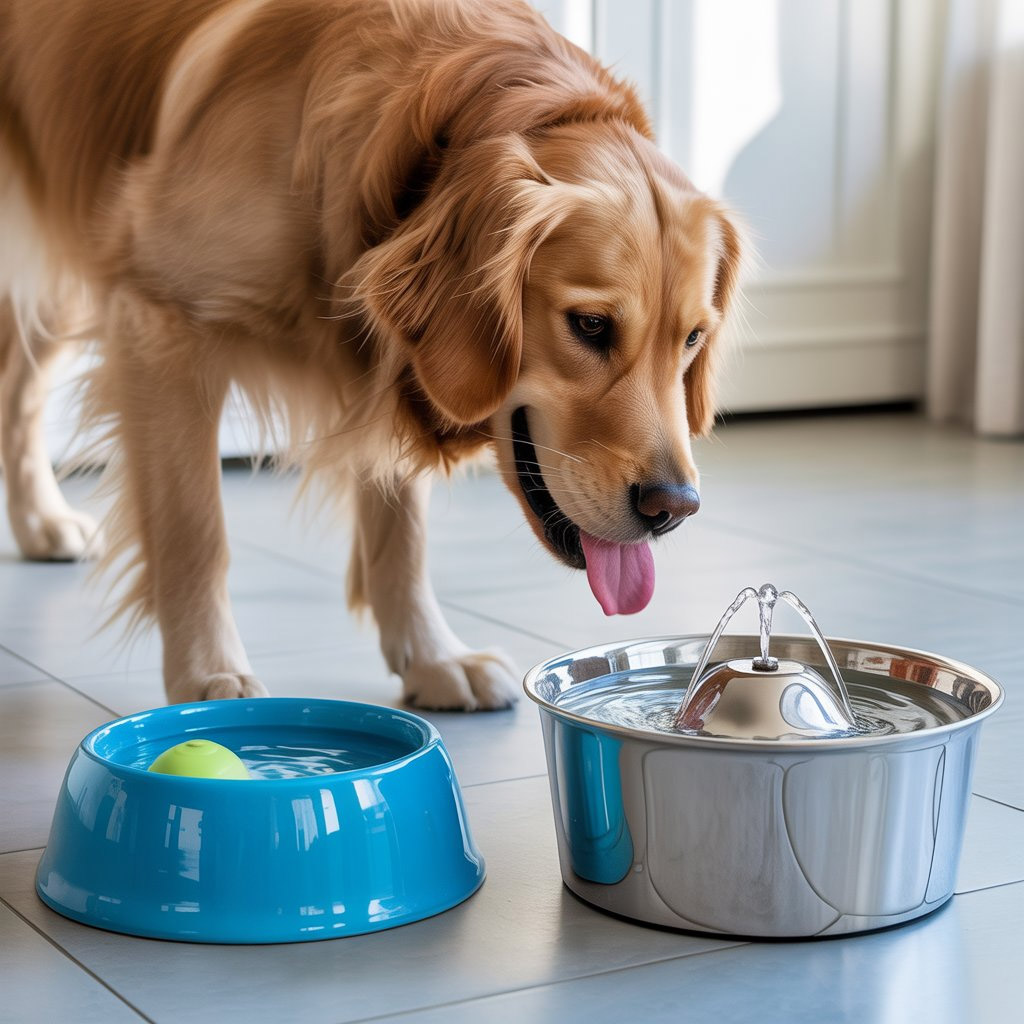
A Dog Water Fountain uses a small pump to circulate water continuously, often drawing water up and allowing it to flow back down. Many designs include filters to remove particles, hair, and impurities, helping maintain cleaner water. The gentle motion and the sound of flowing water tend to draw dogs’ attention more than still water.
The moving stream attracts dogs to drink more often because running water naturally appears fresher and safer to animals. Just like cats, dogs are instinctively drawn to moving water because, in nature, it is less likely to be contaminated.
Health Benefits of a Dog Water Fountain
Switching to a Dog Water Fountain can directly impact your pet’s hydration and well-being.
1. Encourages More Drinking:
Dogs often prefer running water. Studies show that pets with access to moving water tend to drink more compared to those with bowls. Increased hydration reduces the risk of urinary problems, kidney disease, and heat stress.
2. Reduces Bacteria and Contamination:
Still water quickly collects dust, hair, and even bacteria. A fountain’s filtration and circulation system slows bacterial growth, helping dogs drink cleaner water throughout the day.
3. Supports Urinary and Kidney Health
Hydration plays a key role in flushing toxins from the urinary system. Dogs that drink enough water produce less concentrated urine, lowering the chance of bladder infections or stone formation.
4. Helps with Temperature Regulation
Dogs cool themselves by panting, which causes water loss. Having a fountain ensures they have a constant supply of fresh water to replace what’s lost, especially in summer.
Dog Water Fountain vs. Water Bowl: Key Differences
Here’s a clear comparison of both options:
| Aspect | Water Bowl | Dog Water Fountain |
| Taste & appeal over time | Can feel stale after hours; many dogs ignore it until very thirsty | Movement and mild aeration keep water appealing, so dogs return more often |
| Cleanliness between washes | Collects hair, crumbs, and biofilm quickly | Filter + flow help limit debris in the drinking stream |
| Daily chores | Frequent refills; should wash daily (more in summer) | Weekly deep clean + filter changes; fewer day-to-day refills |
| Hydration pattern | Bigger, less frequent gulps | Smaller, more frequent sips—often better for urinary health |
| Multi-pet homes | One bowl empties fast; more crowding | Higher-capacity options keep water available longer |
How to Decide for Your Dog (Simple Checklist)
Before deciding between a bowl and a fountain, think about your dog’s habits and your daily routine:
- Does your dog meet the intake guide? If your pet routinely drinks less than 1 oz/lb/day, a fountain is worth trying to promote more frequent visits.
- Any history of UTIs or stones? With UTIs affecting 14% of dogs over a lifetime, anything that supports regular, clean drinking is a smart habit.
- Bowl hygiene honest check: If you don’t scrub the bowl daily (and more in hot weather), you’re likely dealing with biofilm and higher bacterial counts; a fountain plus a weekly cleaning schedule may fit your routine better.
- Household size and breed: Multi-dog homes and large breeds drain bowls fast. A higher-capacity fountain keeps fresh water available longer.
Cleaning Routines That Actually Work
For bowls
- Wash daily with hot, soapy water; rinse well and dry.
- Prefer stainless steel or glazed ceramic; discard scratched plastic bowls.
For fountains
- Rinse and top up during the week.
- Weekly: Disassemble, scrub all parts (including the pump impeller), replace or rinse filters per the maker’s schedule.
- Use fresh tap or filtered water; avoid letting the pump run dry.
Good hygiene matters no matter which path you pick, because contaminated dishes are a good source of bacterial exposure for pets and people who handle the bowls.
Everyday Health Effects Seen in Dogs
Owners often see positive changes when they move from bowls to fountains. Dogs tend to drink more water during the day, stay better hydrated, and in some cases have fewer urinary problems. Many veterinarians suggest fountains for dogs that struggle with bladder stones or urinary tract infections.
Pet owners also notice everyday benefits less mess from spilled water, cleaner drinking spots, and pets that approach their water more often. The PetCareShed Dog Water Fountain keeps water flowing and filtered, helping it stay fresh and supporting better daily health.
Final Thoughts: Which Is Healthier?
If you clean daily without fail, a stainless or glazed ceramic bowl can work well. But for many homes, a Dog Water Fountain is healthier in practice because it keeps water appealing for longer stretches, supports frequent sipping, and limits debris exposure in the stream your dog actually drinks. Those details directly support hydration goals tied to urinary comfort and kidney workload.